
Translating Brand Standards Into AI Workflows
As AI image generation tools became increasingly integrated into marketing workflows, maintaining visual consistency emerged as a growing challenge. This project transformed Xello’s photography standards into a guided AI-assisted system, combining prompt structures, visual governance principles, and creative direction frameworks into a scalable approach for brand-aligned image generation.
Context
AI Workflows + Visual Governance
Role
Sr. Brand & Marketing Designer
Timeline
Strategic Initiative · 2026
Collaborators
Director of Brand & Comms

A centralized AI photography toolkit designed to guide teams toward authentic, human-centered imagery.

A modular framework translating brand principles into repeatable visual direction.
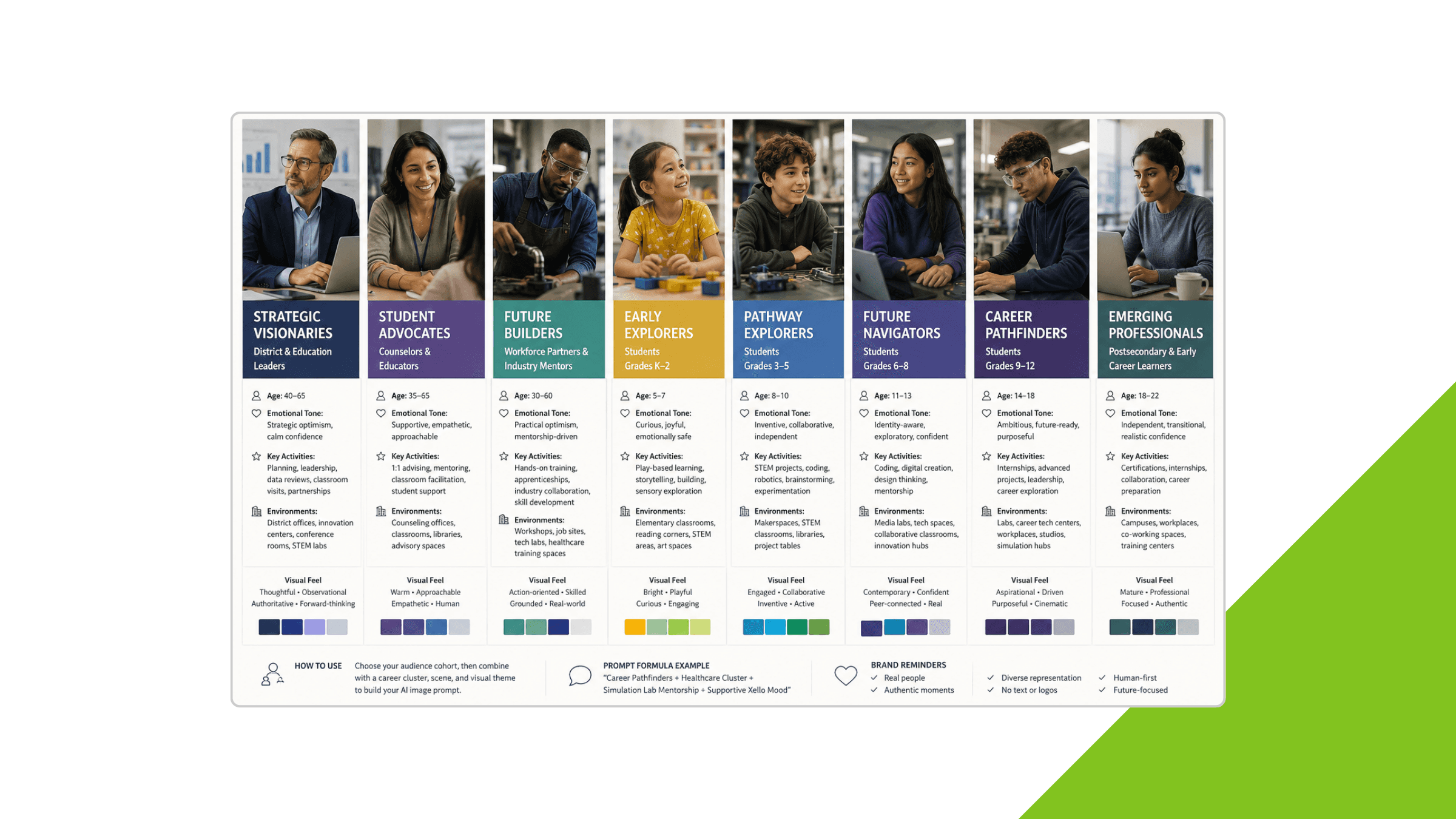
Audience-specific visual systems aligned emotional tone, environments, and storytelling to different learner journeys.

Exploratory scene studies established visual consistency across environments, interactions, and emotional tone.
Challenge
As AI-assisted image generation became more accessible across marketing teams, maintaining visual consistency and brand alignment became increasingly difficult. The organization required a structured framework that could guide non-designers through AI image creation while preserving the established photography direction, emotional tone, and visual language of the Xello brand.
Approach
The project focused on converting brand photography guidelines into a guided AI-assisted workflow capable of supporting scalable image generation across marketing initiatives. Prompt structures, visual references, environmental direction, and conversational guidance systems were developed to help users create imagery aligned with the brand’s established visual language. The system emphasized governance and creative consistency rather than unrestricted image generation.
System
AI Visual Governance
Prompt Systems
Photography Direction
Brand Consistency Framework
AI Workflow Design
Deliverables
AI Prompt Library
GPT Assistant Framework
Photography Standards
Visual Direction Systems
Reference Image Boards
Marketing Applications
Capabilities
AI Workflows
Visual Governance
Brand Systems
Photography Direction
Creative Operations
Outcome
The final system created a more structured and scalable approach to AI-assisted image generation while preserving visual consistency across marketing outputs. By translating subjective photography standards into repeatable workflows, the project helped teams adopt emerging AI tools more confidently without fragmenting the broader brand identity.
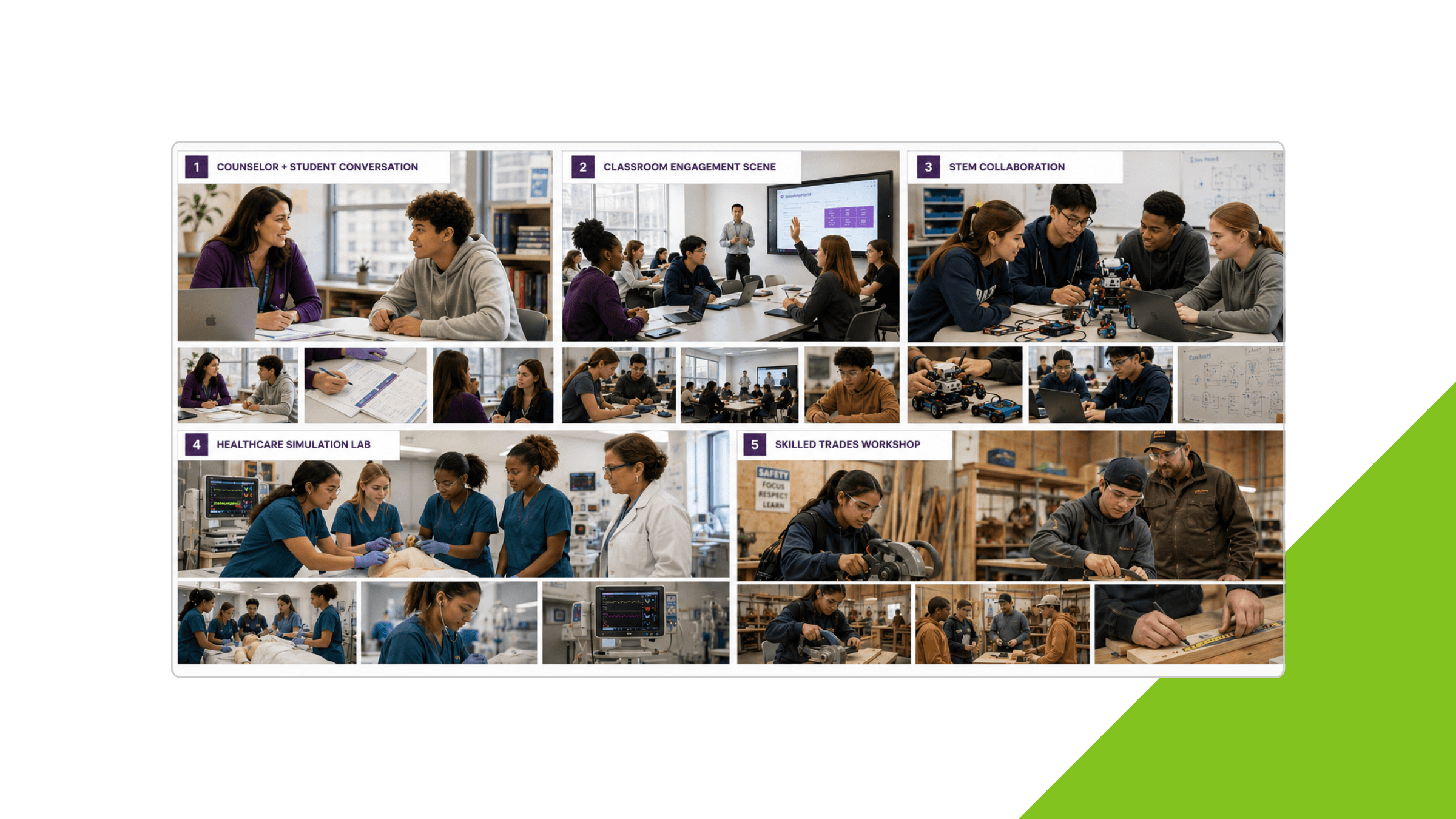
Curated scenario libraries helped teams generate consistent, campaign-ready imagery across educational contexts.
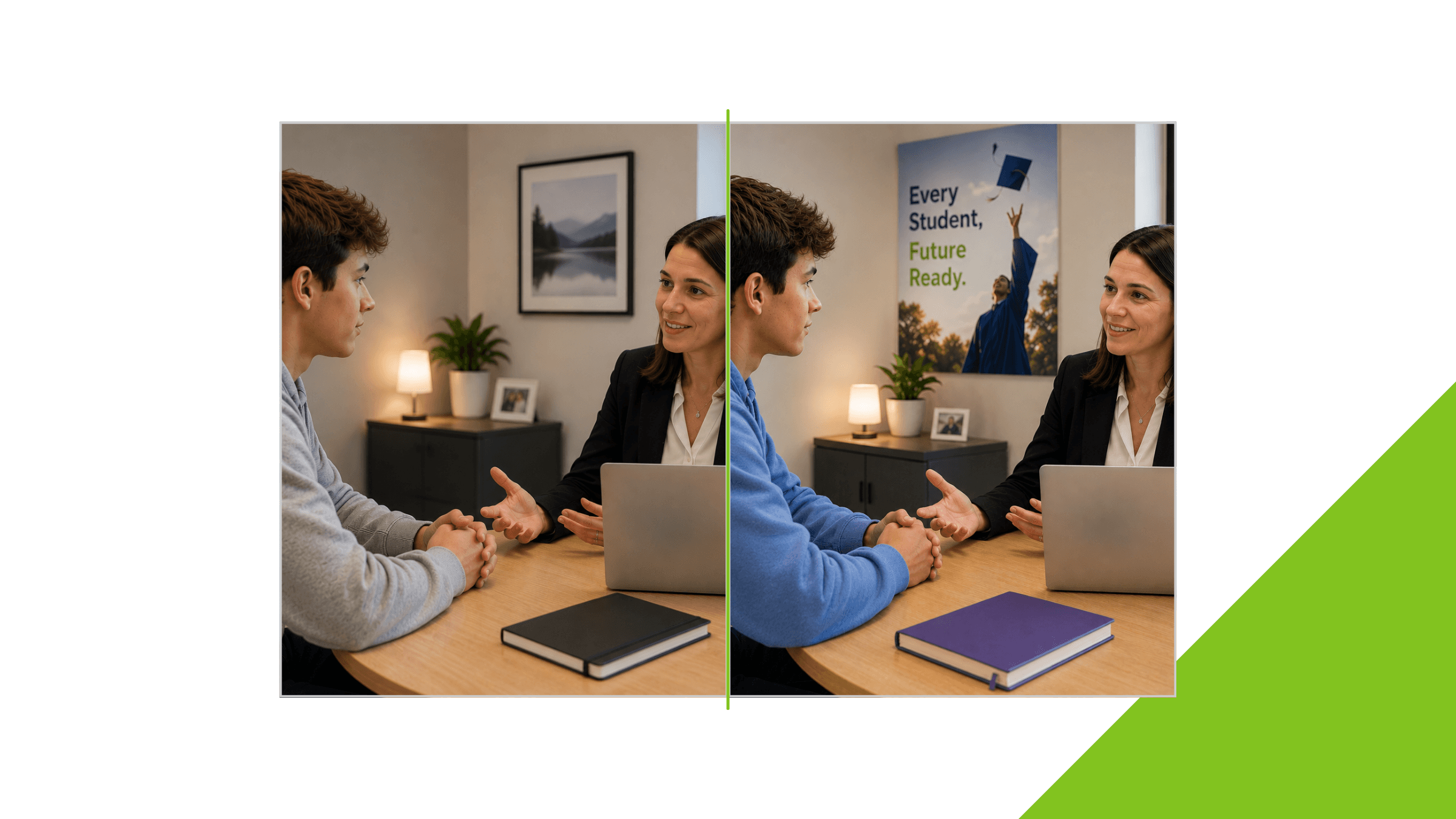
The toolkit shifted outputs from generic AI imagery toward authentic, brand-aligned storytelling.

The photography system scaled across campaign, web, and responsive digital experiences.
Reflection
The project reinforced how important governance becomes as AI tools scale across organizations. The challenge was not generating imagery itself, but defining the structures, behaviours, and visual parameters that allowed teams to move faster while still creating outputs that felt recognizably aligned with the brand system.