Designing the Future of Career Readiness
Future World 2026 expanded beyond a traditional conference identity into a fully integrated experiential system exploring the evolution of careers, education, and workforce readiness. Designed for educators, district leaders, and industry partners, the project combined event branding, environmental storytelling, campaign rollout, and exhibition design into a unified narrative experience.
Context
B2B EdTech Conference + Experiential Design
Role
Sr. Brand & Marketing Designer
Timeline
2025–2026
Collaborators
Brand & Comms Team

Identity system built to evolve across physical space, campaign environments, and exhibition storytelling.

The event website unified registration, programming, and storytelling into one cohesive digital experience.

Interactive session modules made conference content easier to browse, filter, and explore across devices.

A modular presenter deck template gave speakers a consistent framework to build sessions quickly while staying on-brand.

Promotional social assets helped launch and amplify the Future World 2026 conference experience.
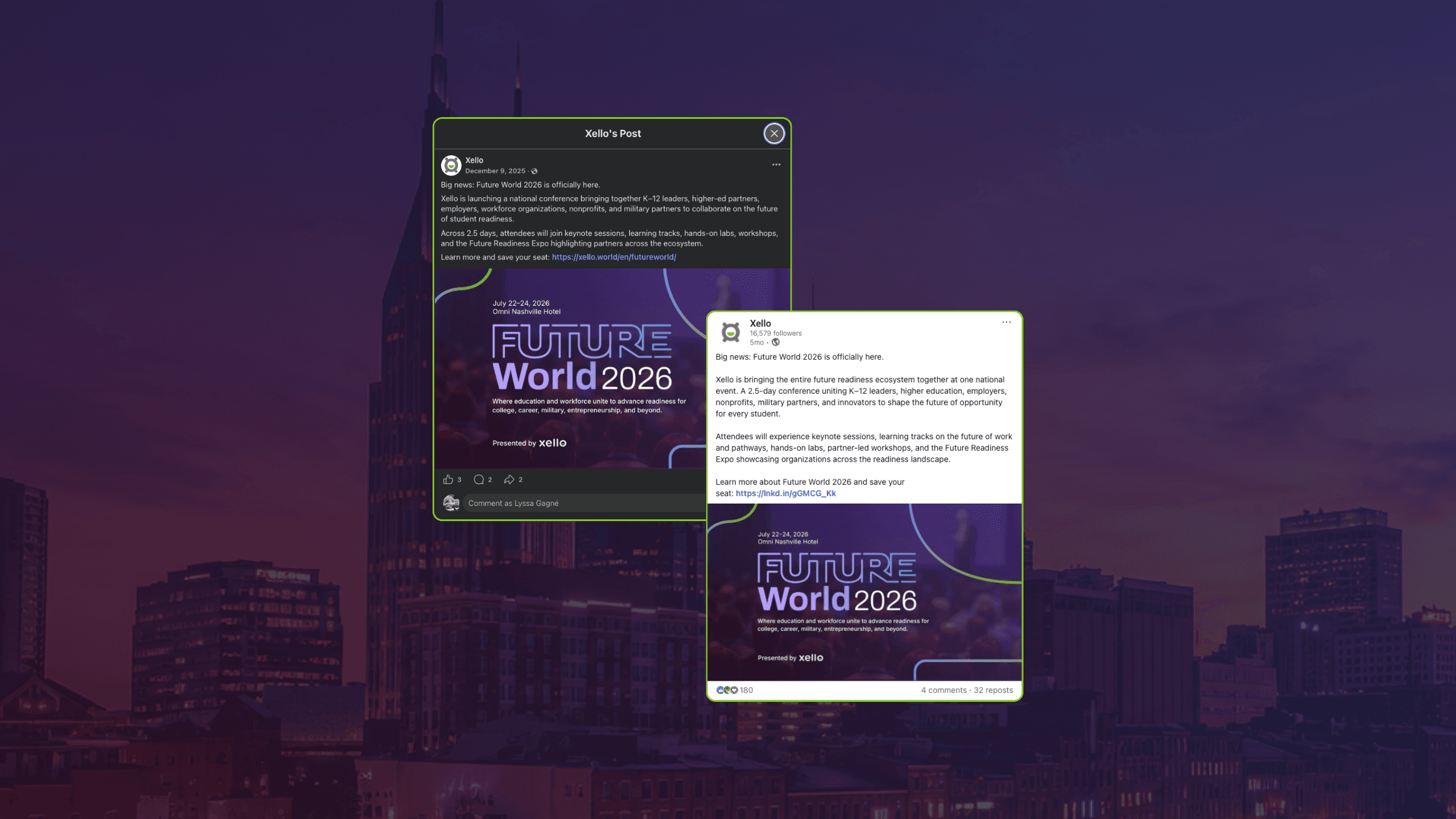
Social and promotional assets extended the conference identity across speakers, partners, and campaigns.

Branded merchandise extended the event identity into tactile attendee experiences.
Challenge
Xello's annual conference required a more expansive identity system capable of evolving beyond traditional event branding into a large-scale environment. The project needed to support exhibition storytelling, sponsor communications, campaign rollout, and digital touchpoints while creating a cohesive narrative experience around the future of careers and education.
Approach
The project approached the conference as an immersive storytelling environment rather than a standard event identity. Visual systems evolved across the attendee experience using progressive colour application, dimensional spatial structures, and environmental graphics inspired by changing workforce eras and future-facing technology narratives. The identity extended across exhibition design, campaign rollout, and digital experiences to create a cohesive experiential ecosystem.
System
Experiential Identity
Environmental Storytelling
Spatial Narrative System
Campaign Ecosystem
Deliverables
Event Identity
Exhibition Graphics
Landing Page
Presenter Assets
Media Kit
Campaign Rollout
Capabilities
Experiential Branding
Environmental Graphics
Campaign Systems
Creative Direction
Narrative Design
Outcome
The final system transformed the conference into a more immersive and future-oriented brand experience that could scale across physical, digital, and campaign environments. By treating the event as an interconnected narrative ecosystem, the project created stronger cohesion between attendee experience, marketing communications, and exhibition storytelling.
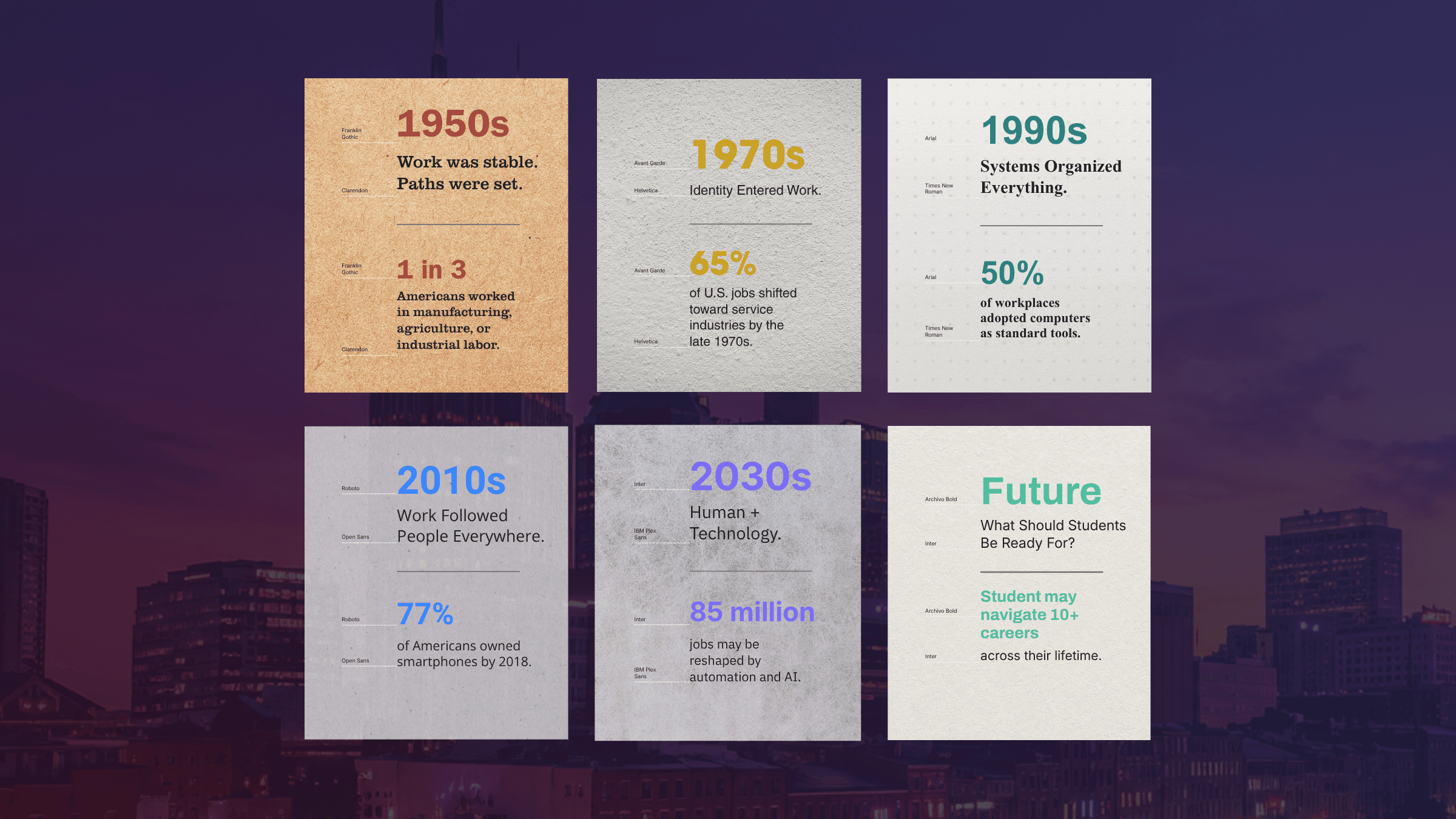
Typographic studies visualized how workplace culture and career readiness evolved over time.

Each environment explored a different era of workforce evolution through colour, materiality, and spatial storytelling.

Three spatial directions explored how visitors could experience the evolution of work across decades.
Reflection
One of the strongest strategic decisions in the project was treating environmental progression itself as part of the storytelling system. Earlier zones used flatter structures and restrained colour palettes while future-facing environments became increasingly dimensional and immersive, allowing attendees to experience narrative progression spatially before engaging with written content.